





How Often Should You Change Your Oil?

Ask five different people how often you should change your oil, and odds are you'll get five different answers, most of them left over from decades-old advice. Our service team at McKay Chevrolet in Raynham hears the old "3,000-mile rule" almost every week, and it's worth setting the record straight. So how often should you change your oil in a modern vehicle? The answer is simpler, and more forgiving, than most drivers expect.
- Most modern vehicles running full synthetic oil can go 7,500 to 10,000 miles between changes, well past the outdated 3,000-mile rule.
- Driving habits, climate, and vehicle type all shape the right interval for your car.
- Skipping oil changes speeds up engine wear and can lead to expensive repairs.
- Fresh oil protects fuel economy, engine performance, and long-term resale value.
- A routine oil change at a dealership service center typically takes well under an hour.
How Often Should You Change Your Oil?
Most Chevrolet models built in the last several years call for an oil change every 7,500 to 10,000 miles when full synthetic oil is used, though the exact interval always depends on what's printed in the owner's manual. Vehicles still running conventional oil should plan on service closer to every 5,000 miles.
That range isn't arbitrary, it reflects real advances in both engine design and oil chemistry. Synthetic oil resists breakdown far better than conventional oil, which made the old 3,000-mile guideline necessary. Still, mileage alone doesn't tell the whole story. A driver who mostly cruises the highway between Raynham and Boston puts less strain on their oil than someone running a lot of short, stop-and-go trips around town, since a cold engine that never fully warms up lets moisture and fuel residue build up faster.
New England winters add another wrinkle, since cold starts are harder on engine components. Many newer Chevrolets also come with an oil-life monitoring system that tracks driving conditions and lets you know exactly when it's time to change the oil, which takes a lot of the guesswork out of scheduling an oil change in Raynham, MA.
- Frequent short trips or a lot of idling
- Regular stop-and-go traffic
- Towing, hauling, or carrying heavy loads
- Extreme heat, cold, or dusty conditions
Why Is Changing Oil Important?

Oil is what keeps every moving part inside the engine from grinding against one another. Once it breaks down, it stops doing that job properly, and the engine starts absorbing damage it can't undo.
Over time, heat and combustion byproducts degrade the oil's lubricating properties and allow contaminants to build up inside the engine. That's the whole point of a scheduled service: draining the old oil, swapping the filter, and refilling with fresh lubricant before things get to that point. It's also one of the fastest, most affordable ways to protect a much bigger investment, an engine replacement costs exponentially more than routine maintenance ever will.
Drivers often ask "How long does an oil change take?" and the honest answer is: not long at all. At a dealership service department, the work itself usually wraps up in 30 to 45 minutes, and factory-trained technicians on Chevrolet vehicles can flag other issues, a worn belt, low fluid, a filter overdue for replacement, while everything's already up on the lift.
Oil Type and Typical Change Interval
| Factor | Typical Interval | Example | Explanation |
|---|---|---|---|
| Conventional oil | ~5,000 miles | Older vehicles, budget-friendly | Breaks down faster under heat and friction |
| Synthetic blend | ~7,500 miles | Daily commuters | Balances protection and cost |
| Full synthetic | 7,500-10,000 miles | Most new Chevrolets | Resists breakdown, lasts longer between visits |
| Severe driving conditions | Shorter than standard | Towing, short trips, extreme cold | Puts extra strain on oil regardless of type |
What Are the Dangers of Not Changing Your Oil?
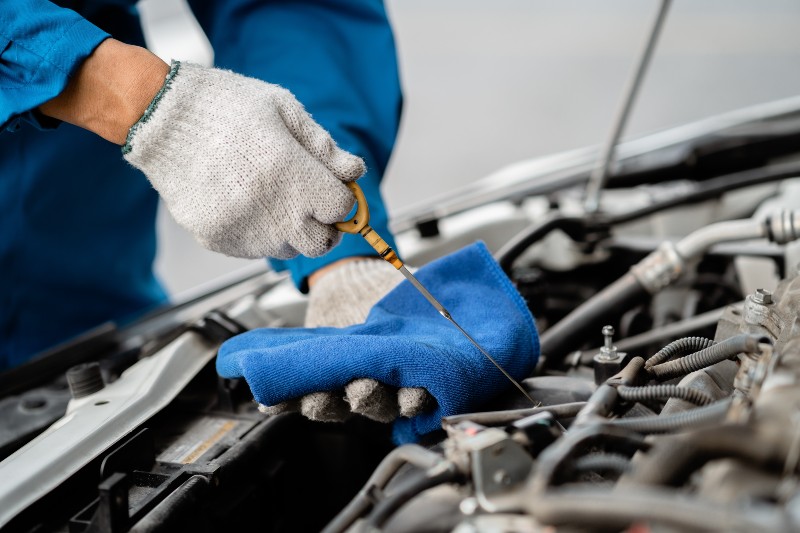
Old, dirty oil loses its ability to lubricate and cool the engine, and that failure doesn't stay quiet for long. Left unchecked, it leads to increased friction, overheating, and eventually, serious engine damage that's far more expensive to fix than routine maintenance would have been.
As oil ages, it thickens, picks up metal particles, and forms sludge that clogs narrow oil passages. That sludge starves parts of the engine of proper lubrication, which raises internal temperatures and accelerates wear on pistons, bearings, and camshafts. Drivers might notice a ticking or knocking sound, sluggish acceleration, a drop in fuel economy, or a burning smell before things get serious, though sometimes there's no warning at all until the check engine or oil pressure light comes on. In the worst cases, neglected oil changes lead to engine seizure, which usually means a full replacement rather than a repair. It can also affect warranty coverage, since manufacturers expect documented, on-schedule maintenance.
None of that is meant to scare anyone, it's just a reminder that oil changes are cheap insurance against a very expensive problem.
Staying Ahead of Your Next Oil Change
At the end of the day, an oil change is one of the simplest ways to protect a car that probably represents a pretty significant investment. Staying ahead of the schedule costs very little and saves a lot, in performance, in fuel economy, and in avoiding repairs nobody wants to pay for. Whenever it's time for an oil change in Raynham, MA, it doesn't have to be a hassle, and the McKay Chevrolet service team is glad to help figure out exactly what your vehicle needs.
If it's been a while since the last oil change, or a dashboard light just came on, scheduling a quick visit to McKay Chevrolet is an easy next step. The service team can check the oil-life monitor, walk through what your specific model needs, and get things handled without eating up the whole day.
FAQ
Ready to schedule your next oil change at McKay Chevrolet?